Articles
Trusted Works joins the Workday Innovation Partner program
Helping nurse managers spend less time checking schedules and more time with their teams.
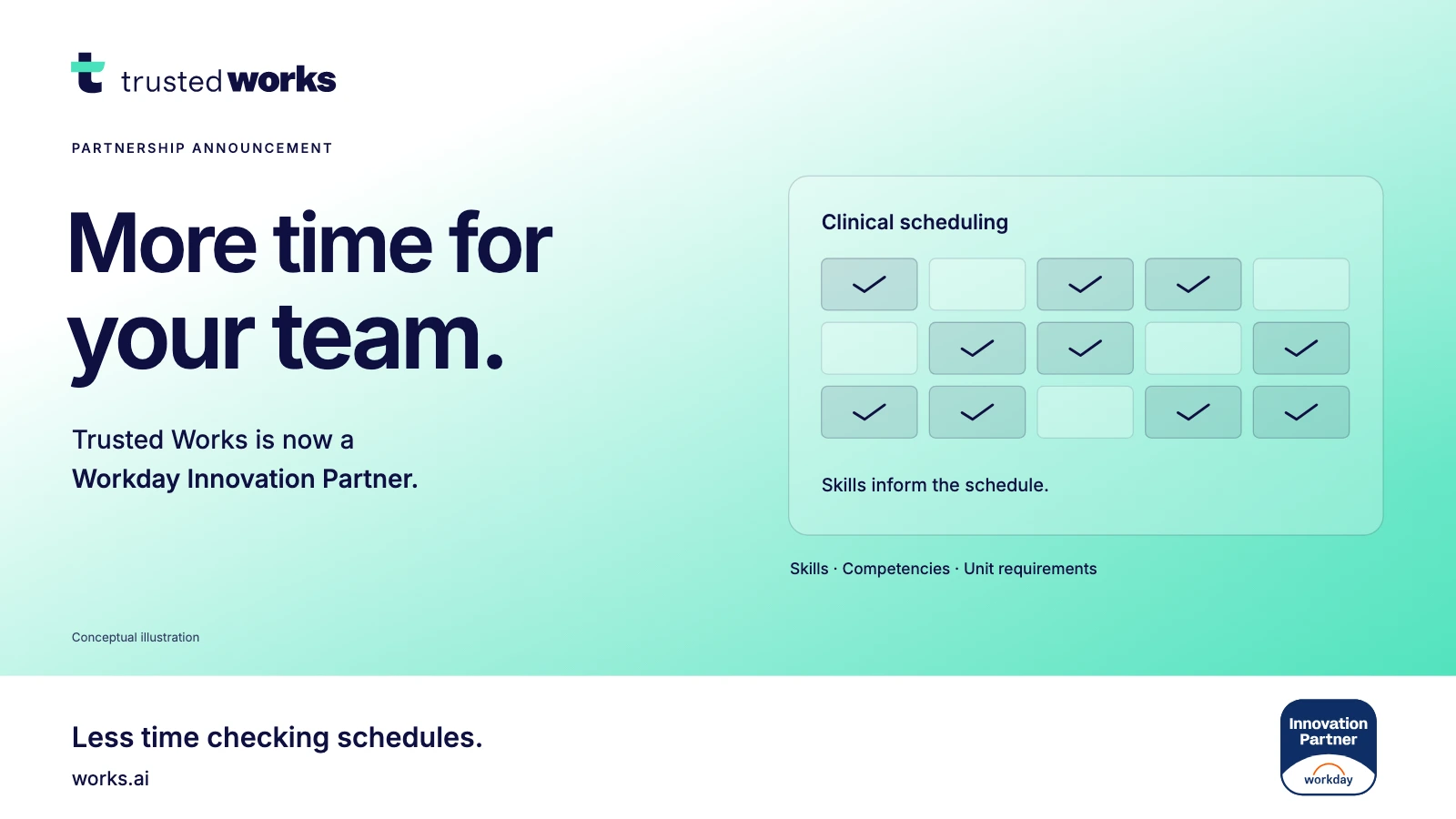
Trusted Works is now a Workday Innovation Partner. We’re starting with a challenge that takes up a lot of a nurse manager’s time: checking that every shift has the skills the unit needs.
A shift can have enough nurses assigned and still be missing a required competency. Catching that can mean going through six weeks of schedules, checking people and requirements one shift at a time. Then a change sends you back to check again.
We want to make that work easier. By connecting clinical skills and competency data in Workday with Works scheduling automation, we can help managers use that information as they build the schedule.
The work behind a full schedule
There’s a lot to balance before a schedule is ready. Each unit has its own staffing targets and skill requirements. Staff have preferences and availability. Managers have to work through all of it while keeping an eye on coverage, fairness, and cost.
Skills and competency records are part of that work. Even when the information is available, someone often has to compare it with the schedule by hand. Being able to look up a clinician’s competencies helps, but it still leaves the manager to check whether each shift has the right mix.
That’s the schedule data gap we’re working to close. As Workday expands its clinical skills and competency capabilities, there’s an opportunity to bring that information into the decisions managers are making every day.
Less checking, shift by shift
Works connects clinical skills and competency data in Workday with the scheduling systems health systems already use. It brings each staff member’s skills together with the requirements for the unit where they’ll work.
Works Schedule Balancer uses that information to help build the schedule. It’s designed to do that in minutes, accounting for target skill and competency minimums along with the other requirements that shape coverage.
For a manager, that means less time going line by line through a six-week schedule to check competency coverage. It leaves more time to support staff, help them develop, and work through the issues that need a manager’s attention.
Keep the systems your teams know
Health systems have invested a lot in their workforce technology. Adding help with clinical scheduling shouldn’t mean starting over.
Works is designed to work with scheduling platforms including UKG, ShiftWizard, and symplr. Your existing scheduling, time and attendance, and payroll systems stay in place. Works adds automation for the clinical scheduling work around them.
Building on those systems also helps teams get started sooner. Health systems can see benefits from Works across their organization within three to six months, without taking on a full scheduling-system replacement.
Building on what’s working
Works Schedule Balancer is already improving published schedule fill rates by 4–10% while satisfying skill and competency minimums. We’re bringing that experience to our work as a Workday Innovation Partner.
It builds on Works OnDemand, our open-shift filling tool, which reduces premium spend per labor hour while increasing shift coverage. The two tools help teams build a stronger schedule and fill gaps as they come up.
The goal for this partnership is straightforward: help managers build schedules that reflect the skills their units need, with fewer hours spent checking every detail by hand. That’s time they can put back into their teams.
Let’s talk about your schedules.
Tell us where your team spends the most time. We’d be happy to show you how Works can help.